
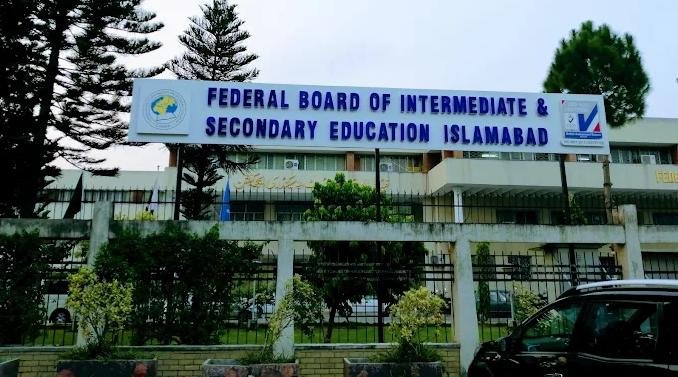
The National Database and Registration Authority (NADRA) and the Federal Board of Intermediate and Secondary Education (FBISE) have signed an important agreement aimed at integrating the student registration system for matriculation and intermediate examinations with the country’s national identity database. The initiative is designed to improve the accuracy of student records, reduce discrepancies during registration and make the issuance and verification of educational certificates more efficient and reliable.
The agreement was signed at NADRA Headquarters in Islamabad during a ceremony attended by senior officials, including FBISE Chairman Dr. Ikram Ali Malik and the Chairman of NADRA. Under the agreement, a secure mechanism for the exchange of data between the two institutions will be established, allowing NADRA to provide key student information directly to FBISE from its official records.
The information to be shared will include important personal details such as a student’s full name, father’s name and date of birth. By linking these details with the national identity database, the authorities aim to minimize errors and inconsistencies that can occur during student registration. Such discrepancies can sometimes create difficulties for students when obtaining examination records, certificates, admissions or verification of their educational documents.
The integration is also expected to strengthen the reliability of educational records maintained by the Federal Board. By cross-checking student information against NADRA’s records, the system could help ensure that educational credentials are issued on the basis of accurate and verifiable personal information. This may also reduce administrative delays and the need for repeated manual verification.
A major component of the partnership is the development of a secure digital wallet for educational certificates. Through this digital facility, students will be able to access and securely store their educational certificates and other relevant academic documents in digital form. They will also be able to share these documents electronically when required, potentially making the process of submitting educational credentials to universities, government departments, employers and other institutions considerably easier.
The proposed digital wallet represents a broader move toward paperless educational documentation in Pakistan. Instead of relying entirely on physical certificates, students could have access to digitally stored and verifiable academic records. Such a system could prove particularly useful for students applying to universities, seeking employment or pursuing education and professional opportunities abroad, where the verification of academic credentials is often an important requirement.
The NADRA-FBISE agreement is also part of a wider initiative to establish stronger digital links between Pakistan’s national identity infrastructure and its education sector. NADRA has been working toward facilitating secure digital data sharing with secondary and higher secondary education boards across the country, as well as universities and the Higher Education Commission (HEC).
The broader objective is to create a more interconnected education data ecosystem in which student identities and academic records can be verified through secure digital channels. If successfully implemented and expanded nationwide, such integration could improve administrative efficiency while reducing duplication, paperwork and the possibility of errors in educational records.
For students, the initiative could eventually mean a simpler registration and documentation process. Accurate personal information could be transferred directly from NADRA’s records to the relevant education board, reducing the burden of repeatedly entering the same information and lowering the risk of differences between identity documents and academic records.
The development could also contribute to greater transparency in the verification of educational qualifications. A secure digital system linking identity information with official academic records may make it easier for authorized institutions to verify certificates and confirm that they belong to the individual presenting them.
However, the effectiveness of the initiative will depend on the secure implementation of the data-sharing mechanism, the accuracy of information held by the relevant institutions and strong safeguards for protecting students’ personal data. As more educational records become digitally interconnected, ensuring privacy, cybersecurity and controlled access to sensitive information will remain essential.
The agreement between NADRA and FBISE therefore marks an important step toward the digital transformation of Pakistan’s education and documentation systems. By connecting student registration with national identity records and introducing a secure digital wallet for educational certificates, the initiative aims to make academic documentation more accurate, accessible and verifiable. The planned expansion of similar digital data-sharing arrangements to other education boards, universities and the Higher Education Commission could eventually lay the foundation for a nationwide, digitally integrated education records system.