
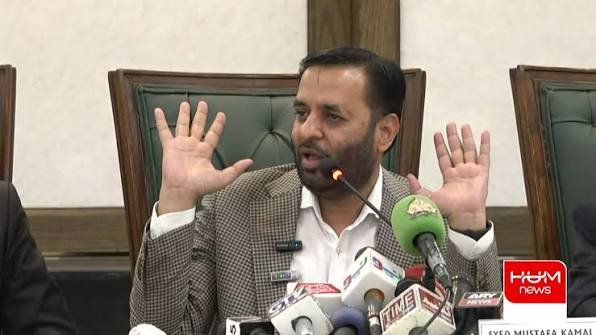
Federal Health Minister Syed Mustafa Kamal has told the Senate that holding a ministry or office has no personal importance for him and that if he is found responsible for any wrongdoing, he is prepared to give up his ministry.
Speaking in the Senate, Kamal referred to the recent incident at PIMS and said that around 80 patients had been rescued from the affected floor. He also demanded that those responsible for the incident face consequences and pointed out that, apart from the main inquiry committee, PIMS had not formed a separate internal committee.
His statement about sacrificing his position may sound politically bold. But another controversy has been overshadowing his message: videos circulating on social media over the past two days have triggered strong criticism over his alleged behavior and tone toward members of the public.
That raises a much bigger question.
Is giving up a ministry enough, or should public representatives also be accountable for the way they treat ordinary citizens?
A federal minister is not merely an administrator. He is a public representative, and public representatives are expected to listen to criticism, answer difficult questions and maintain patience even when confronted with anger or disagreement.
If a minister says that he is ready to sacrifice his office but appears unwilling to tolerate criticism from the public, then the issue goes beyond a particular ministry. It becomes a question of political culture, public accountability and respect for citizens.
The health sector is especially sensitive. Ordinary Pakistanis already face expensive treatment, shortages of medicines, overcrowded hospitals and inadequate healthcare facilities. They need more than strong statements from the health minister—they need better hospitals, transparent investigations and measurable results.
Kamal’s declaration that he will resign if found responsible is therefore only the beginning. The real questions are: Will the investigation be transparent? Will those responsible actually be held accountable? And what concrete measures will be taken to prevent such incidents in the future?
At the same time, if the social-media videos accurately reflect his conduct toward citizens, that matter also deserves an explanation. Accountability should not be limited to financial or administrative wrongdoing. Respect, temperament, transparency and responsiveness are also essential qualities of public office.
The public does not simply need a minister who says he is willing to sacrifice his position.
They want a minister who is willing to accept responsibility, listen to criticism and deliver results.
Because leaving a ministry may be easy—but earning back the public’s trust is much harder.
Note: Social-media videos should be verified in their original, complete context before definitive claims are made about anyone’s conduct.