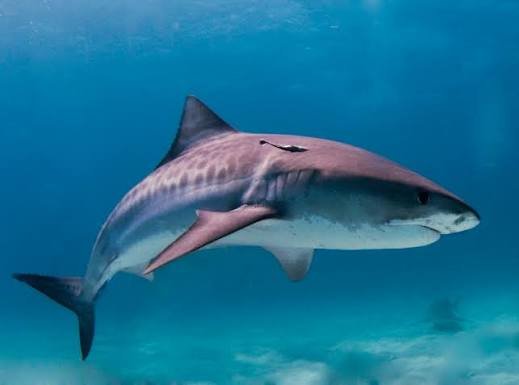


An unexpected shark sighting has turned a waterfront area in Busan, South Korea, into a temporary tourist attraction, drawing an estimated 20,000 people who wanted to catch a glimpse of the unusual visitor.
The shark was spotted in the waters around North Port Waterfront Park, where people normally come to enjoy the waterfront and surrounding public spaces. Instead, visitors suddenly found themselves watching a large shark swimming through the relatively confined waterway.
According to reports, the shark was first spotted on the morning of September 18, 2026, at around 8:57 a.m. It was later seen again in the same area, suggesting that it had not immediately returned to the open sea.
The unusual sighting quickly spread through social media. Residents and visitors began recording videos and taking photographs of the shark, while clips of the animal swimming near the waterfront attracted widespread attention online.
The public response was particularly striking over the weekend. Local authorities estimated that around 8,800 people visited the area on Saturday and approximately 10,000 on Sunday, bringing the total number of visitors to roughly 20,000. The crowds were reportedly several times larger than the park’s normal weekend attendance.
Authorities also attempted to guide the shark back toward the open sea. The Busan Coast Guard used boats and personnel during an operation that lasted several hours. However, concerns were raised about forcing the animal through a narrow waterway, as doing so could potentially stress or injure the shark.
The operation was subsequently halted, with authorities continuing to monitor the animal and assess the safest way to deal with the situation.
There has also been some uncertainty surrounding the shark’s exact species. South Korean fisheries authorities have identified it as a large coastal shark, while different reports have used somewhat different species names. Because of these differences, the precise identification should be treated cautiously until confirmed through a definitive scientific assessment.
Experts have suggested that factors such as warmer water and the availability of food could potentially explain why the shark entered the unusual location.
But the story did not remain a simple wildlife incident for long. The shark quickly became an internet sensation. Social media users began giving it nicknames, creating memes and sharing humorous posts. Some users even produced AI-generated images portraying the shark as a new symbol or unofficial mascot of Busan.
The popularity of the sighting was so great that the shark effectively became a temporary attraction, with thousands of people gathering simply to watch it from a safe distance.
At the same time, authorities urged the public not to approach the animal or enter the water. Although the risk to people standing on land may be low, getting into the water near an unfamiliar shark could create a dangerous situation.
The incident also highlighted an interesting modern phenomenon: a single unexpected wildlife encounter can quickly become a major social-media event. What began as an unusual shark sighting in Busan ended up drawing thousands of spectators and turning an ordinary waterfront park into one of the city’s most talked-about locations for several days.
For Busan, the unexpected visitor may have been temporary, but the images, videos and memes generated by the shark are likely to remain online long after it returns to the open sea.