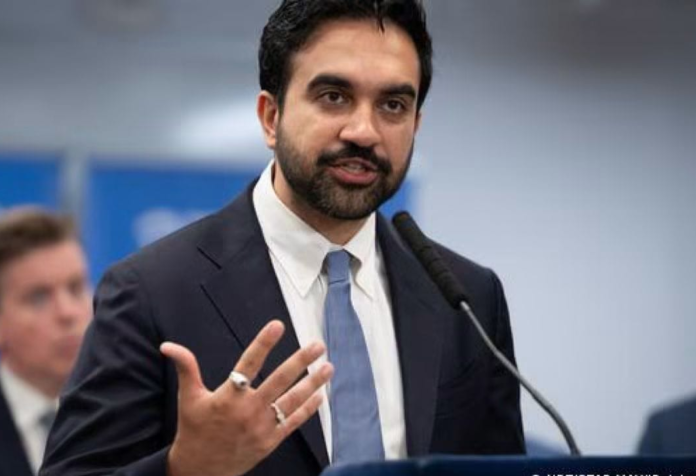


New York: New York City Mayor Zohran Mamdani has announced a one-year pause on the direct use of generative artificial intelligence tools by younger students in the city’s public schools.
The policy will apply during the 2026–27 school year to students from 2-K through eighth grade, covering roughly 600,000 children in the largest public school system in the United States.
According to the mayor’s office, the temporary restriction is intended to give the city time to study how generative AI is affecting children’s learning, independent thinking, creativity and ability to solve problems without relying on technology. The policy covers generative AI software and chatbots that students would use directly.
City officials say the goal is not to reject artificial intelligence altogether, but to make sure that technology does not replace the human interaction and critical thinking that are essential during the early years of education.
The policy will not completely keep older students away from AI. High school students will still be able to participate in selected AI-literacy classes and supervised pilot programmes designed to teach them how to use the technology responsibly. Teachers will also retain certain permitted uses of AI in their work.
The announcement has already sparked a wider debate over how schools should deal with rapidly developing AI technology. Supporters argue that younger children need more time to develop basic academic and social skills before becoming heavily dependent on AI. Critics, however, say artificial intelligence is becoming an unavoidable part of modern life and that students should learn how to use it safely rather than simply being kept away from it.
New York City previously blocked access to ChatGPT in its public schools in 2022, although that policy was later changed. The latest decision represents a broader attempt to reassess the role of generative AI in education.
The one-year pause will therefore serve as something of a real-world experiment: Can schools protect children’s independent thinking while still preparing them for a future in which artificial intelligence will be everywhere?