
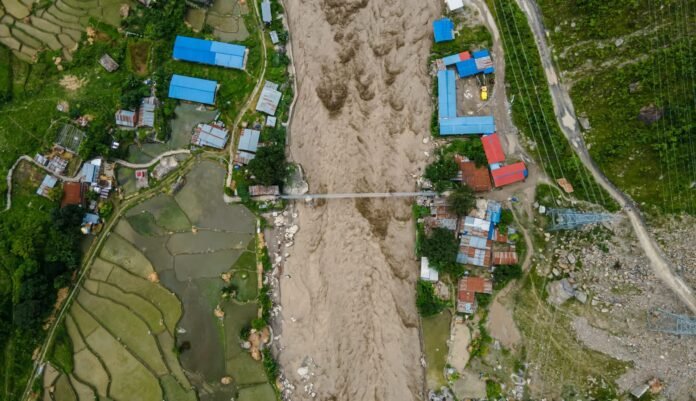
The recent glacier collapse in Nepal’s Himalayan region has once again highlighted the growing dangers linked to climate change and the rapid transformation of the world’s mountain environments.
A large mass of ice, rock and debris collapsed from a glacier in the high mountains, sending huge amounts of material into the valley below and triggering severe flooding. The incident affected areas near the Nepal–China border and caused significant damage to roads, bridges and other infrastructure.
Scientists warn that rising temperatures are accelerating the melting and weakening of glaciers across the Himalayas. As glaciers retreat and mountain slopes become increasingly unstable, the risks of landslides, avalanches, glacier collapses and sudden floods are also increasing.
Experts caution that it would be too early to attribute any single glacier collapse entirely to climate change. However, long-term warming is clearly changing the stability of high-altitude ice and rock formations, making extreme events a growing concern.
The Himalayas are critically important because their glaciers provide water to hundreds of millions of people across Asia. Rapid changes in these glaciers could create two major problems: increased flood risks in the short term and serious water shortages in the future.
The latest disaster is therefore more than a local tragedy. It is another warning about the consequences of a warming planet.
Experts are calling for stronger glacier monitoring, improved early-warning systems, better disaster preparedness and greater cooperation between countries sharing the Himalayan region.
Headline:
“Climate Change Warning: Glacier Collapse Triggers Devastating Floods in Nepal”
Alternative Breaking Headline:
“Himalayas Under Threat! Glacier Collapse and Floods Raise Fresh Climate Change Alarm”