
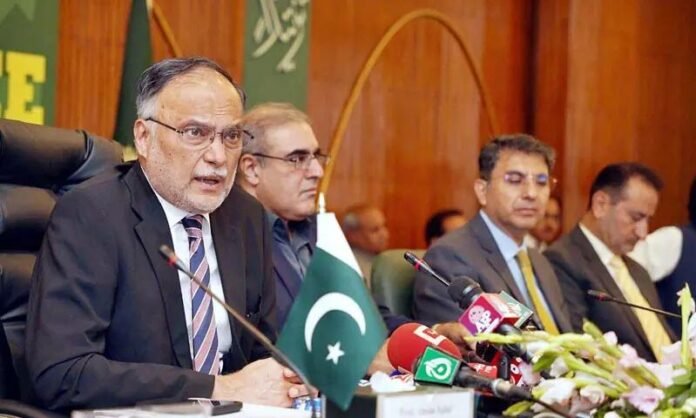
Federal Minister for Planning and Development Ahsan Iqbal has once again spoken about taking Pakistan beyond economic stability toward sustainable growth, higher exports, investment, job creation and increased productivity. He has highlighted Pakistan’s young population, digital economy, agricultural and mineral resources, strategic location and technological potential, while reiterating the ambitious goal of turning Pakistan into a $1 trillion economy by 2035.
These goals may sound encouraging. But the real question is not what is being promised for the future. The real question is what has actually been delivered.
With the next election season approaching, the public has every right to question why politicians are once again presenting visions of prosperity when millions of Pakistanis continue to struggle with inflation, unemployment, expensive electricity and gas bills, high taxes and declining purchasing power.
If the government and its senior ministers already understand the importance of exports, productivity, investment, technology, human capital and policy continuity, then people are entitled to ask: why have these priorities not produced a visible transformation in their daily lives during the years in which the same political leadership has been in power?
A $1 trillion economy may be an impressive target, but the ordinary Pakistani has more immediate questions.
When will household incomes rise? When will young people find decent jobs? When will electricity bills become affordable? When will families be able to provide quality education and healthcare for their children without falling deeper into financial hardship?
Ahsan Iqbal is right to emphasize education, skills, artificial intelligence, exports and productive capacity. But national plans and speeches alone cannot transform an economy. Pakistan also needs political stability, consistent policies, transparent governance, merit, accountability, investment-friendly regulations and, most importantly, economic policies that actually improve the purchasing power and living standards of ordinary citizens.
The biggest problem is the growing gap between economic claims and people’s lived reality. If politicians talk about growth while ordinary families are struggling to pay bills, afford food, educate their children and find employment, then a legitimate question arises:
Development for whom?
As the election season approaches, political parties will once again present ambitious promises and visions of a brighter future. But the public needs more than promises. They need measurable results.
They need to know why the country’s enormous human and natural potential has not translated into better living standards despite years of political promises.
The real test of sustainable development is not the size of a target announced at a conference. It is whether an ordinary Pakistani can actually feel the difference in their income, employment, education, healthcare, electricity bills and household expenses.
So the question to Ahsan Iqbal and every other political leader is simple:
If Pakistan has the resources, young population, strategic location and enormous economic potential being discussed today, why is the ordinary Pakistani still waiting for the promised prosperity?
The time has come to move beyond speeches and election-season dreams. If sustainable development is truly the goal, then the centre of economic policy must be the ordinary citizen—not political power.