
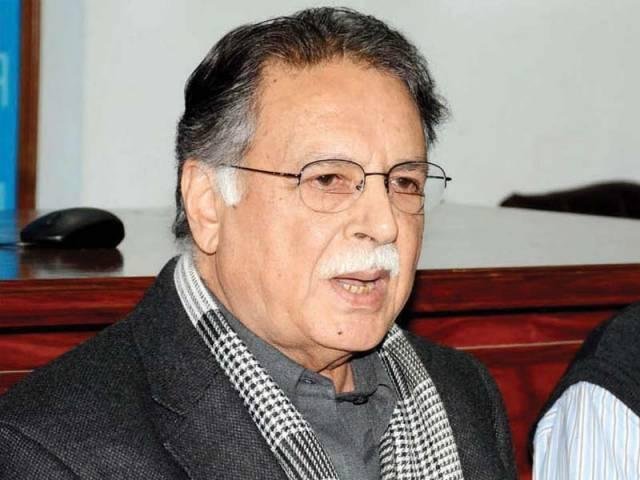
Pakistan Muslim League-Nawaz Senator Pervez Rashid has suggested that everyone receiving a government salary—including the president, prime minister, bureaucracy and judiciary—should receive medical treatment from public hospitals.
His argument is straightforward: if senior officials are forced to use the same public hospitals as ordinary citizens, they will have a direct incentive to improve those hospitals.
On the surface, this is a reasonable and potentially powerful idea. But it raises an even more important question: Will this principle genuinely apply to everyone, or will it change according to political circumstances?
The debate has become particularly controversial because healthcare for political leaders has repeatedly been treated as a political issue. In the case of Imran Khan, the Supreme Court recently directed that he be medically examined at a private hospital, while he was subsequently taken to PIMS before being returned to prison. The government cited security concerns.
The criticism, therefore, should not simply be about whether Imran Khan should receive treatment in a public or private hospital. The real issue is whether the same standard is applied to every political leader.
Nawaz Sharif’s case also illustrates why this question cannot be ignored. During his imprisonment, he received treatment at Services Hospital, but later the Lahore High Court allowed him to travel abroad for medical treatment.
That history makes Pervez Rashid’s latest statement particularly open to political scrutiny.
If the principle is that anyone paid by the state should use public hospitals, then the principle should apply equally to presidents, prime ministers, ministers, parliamentarians, judges, bureaucrats and every other powerful individual.
But if a particular patient genuinely requires treatment, equipment or specialists unavailable in a public hospital, then an exception should be based on medical necessity—not political affiliation.
This is where the real hypocrisy debate begins.
If public hospitals are good enough for the country’s political leadership, then why not make them good enough for every Pakistani? And if they are not good enough for senior politicians, then ordinary citizens cannot reasonably be expected to accept inadequate healthcare as their only option.
The answer should not depend on whether the patient is Imran Khan, Nawaz Sharif or an ordinary citizen.
Illness should never become a political weapon.
Pervez Rashid has raised an important point about improving public hospitals. But if the statement is being used merely as another political attack against Imran Khan, then the public has every right to ask:
Why should the standard change when political loyalties change?
The real reform would be to make public hospitals so effective, modern and reliable that no Pakistani—whether a political leader or an ordinary citizen—needs to leave the country simply to receive quality medical care.
Otherwise, politicians may continue changing their statements according to circumstances, while the real disease—a two-tier system of privilege—remains untreated.