
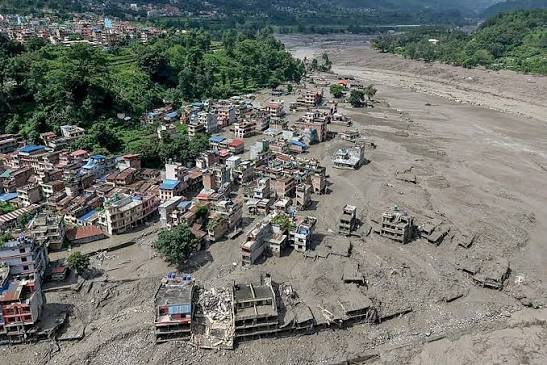
A devastating flash flood has struck northern Nepal, turning parts of the Trishuli River into a raging torrent and leaving a trail of destruction across several communities.
The footage, recorded near Trishuli Bazaar in Nuwakot district, shows muddy floodwater surging rapidly through the river, dangerously close to bridges and colorful buildings. The sudden rise in the river level caught communities off guard and caused widespread damage.
The disaster began after a massive mass of ice, rocks and debris fell into a river in the mountainous region near Nepal’s border with China’s Tibet. The resulting surge moved downstream through the Bhote Koshi river system before joining the Trishuli River, dramatically increasing water levels and carrying huge amounts of mud and debris downstream.
Several villages, roads, bridges, homes and hydropower facilities have been damaged. Reports indicate that dozens of bridges and sections of roads have been swept away, while electricity and communication links have also been disrupted in affected areas.
The human toll has been devastating. Initial reports on August 26 said at least 95 people had been killed, but by August 27, reports indicated that the combined death toll in Nepal and Tibet had risen to around 160–165 people. Hundreds of people are still reported missing, and authorities fear the toll could rise further as search and rescue teams reach previously inaccessible areas.
Foreign nationals have also been caught up in the disaster. Hundreds of tourists and travelers were reportedly stranded or missing, including people from several countries who were traveling through the region toward religious and tourist destinations.
Nepalese security forces, police and rescue teams are continuing search-and-rescue operations. However, destroyed roads, collapsed bridges, powerful currents, landslides and damaged communication networks are making access to many affected areas extremely difficult.
The disaster has left communities along the Trishuli River facing an uncertain and dangerous situation. Authorities are urging residents living near the river to move toward safer areas and remain alert to further flooding and landslides.
What began as a sudden natural disaster in the high Himalayas has now become a major humanitarian emergency, with rescue teams racing against time to locate those still missing and provide assistance to affected communities.